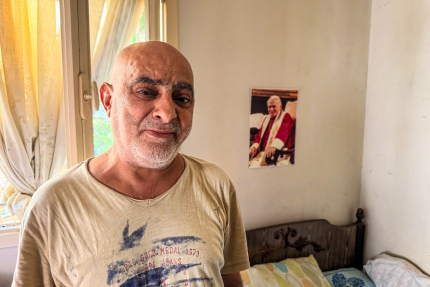
“— I was wounded here, it hurt like hell,” George says, reaching for his thigh. “Roger was hit too. He was lying in a pool of blood. I thought he was dead. When we saw each other in the same ward at the military hospital, we both cried with happiness,” George recalls.
“— In war, you don’t fight for your country or for abstract ideas. You fight for the person standing next to you,” Roger adds. Both men, overwhelmed with emotion, embrace as if they had rediscovered a lost part of themselves after many years.
Roger and George fought in the same war. Side by side. Both were wounded in the same shelling. Neither was expected to survive. But they did. This is how a blood brotherhood is born—one that binds people for life. It bound Roger and George, even though at some point each went their own way: work, family, children. Years later, George realized he had lost track of his fellow soldier and began searching for him relentlessly.
There was a building on Armenia Street in Beirut. Battered, riddled with holes, partially collapsed. Destroyed and forgotten after the Beirut explosion, which struck everything in its path without mercy. Life returned to other buildings; they recovered, their wounds healed. This one on Armenia Street never got back up. Half a year ago, we found Roger living there. The ruin he hid in mirrored his state of mind and health. The same explosion had taken his family and driven him into bankruptcy. Then cancer came. It was like kicking someone who was already down.
Thanks to you, Roger is continuing his treatment. Thanks to you, we wanted to take him out of that concrete shell on Armenia Street and give him a safe, warm, and welcoming place to live. When it became clear that we were moving Roger into a new apartment, something extraordinary happened.
“— When I saw him…” George’s voice stops in his throat. Seeing Roger living on the street tore his soul apart like a shrapnel ripping through flesh. Remembering those moments, they both still cry. George didn’t hesitate for a second—he took Roger in. He gave him a room and now cares for him. When needed, he comforts him, and sometimes, with a single blunt sentence, pulls him out of despair. He reminds him to take his medication, brews Lebanese coffee every morning, and over it they return to memories of their time in uniform. A friendship forged in the thunder of shells moves us to tears—until we all end up crying together.
Roger is no longer at risk of homelessness. He is no longer alone. The illness, however, remains a threat. That is why we continue to provide medical support for Roger. The funds raised for a roof over his head will now support his shared home with George and cover the cost of hospital tests, which have become increasingly frequent.