

Mauritania
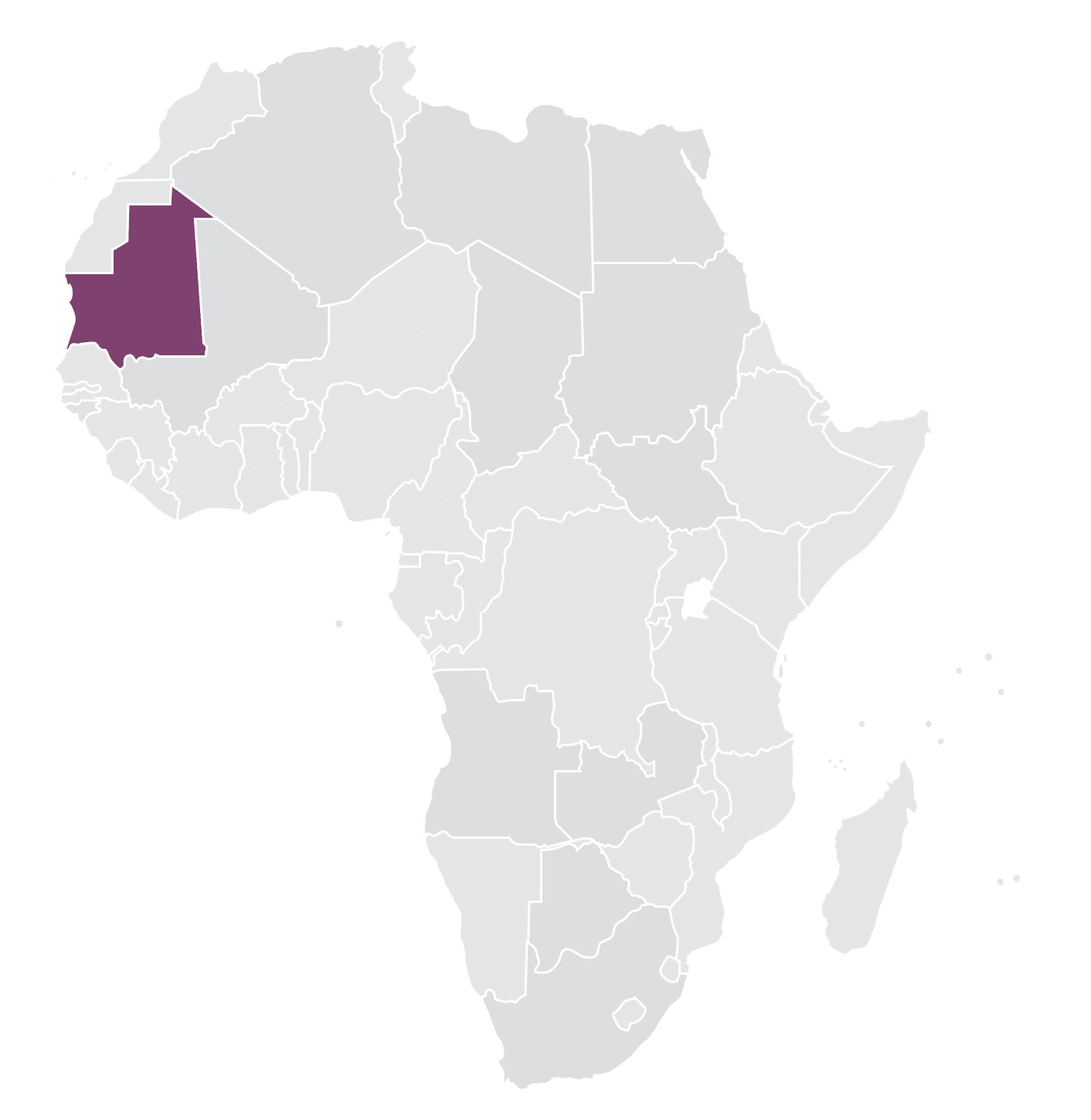
More than 90% of Mauritania is covered by Sahara sands. Recurrent droughts destroy natural resources, and domestic grain production meets only about a quarter of the country’s needs—the rest must be imported. Hunger stems from poverty and the country’s inability to feed its own population. Nouakchott, the capital, is one of the most neglected cities in the region. Children with disabilities remain hidden at home, and their mothers live with a deep sense of guilt and social exclusion.
Overview:
- One of the poorest countries in the world – about 5.8% of the population lives on less than USD 2.15 a day
- Domestic grain production covers only about 24% of food needs (around 76% comes from imports)
- About 25% of children under five suffer from chronic malnutrition
- 61% of the population experiences moderate or severe food insecurity, and about 12% are in food crisis (IPC Phase 3+)
- People with disabilities are largely invisible to the state—there is no systemic support, rehabilitation, or education for them
- Mothers of children with disabilities are commonly blamed and excluded—they often believe their child’s disability is a personal failure or a punishment
Every day, we bring
30 children
to the Foyer for rehabilitation, meals, and educational activities.
We provide regular care to
195 children with disabilities
and their families
18.02.2026
“Look at that woman. That’s what someone stripped of hope and dignity looks like.”
Nicole and I are driving through the capital of Mauritania. A sandstorm has swept across Nouakchott. The air is thick with sand and dust. The city has disappeared into shades of sepia that sting your eyes and catch in your throat. The sky has been hidden for days. The storm has drained the color from everyday life. But for some people, life lost its color long ago. Not because of the sand or the dust, but because of their child’s disability.
Women in the Sahara wrap themselves in a melhfa, a long piece of fabric that, when draped just right, covers their hair and falls all the way to their feet. It protects them from the sun, the wind, and the sand. The woman sitting by the roadside uses one hand to pull the fabric over her face. Behind that single piece of cloth, she hides her sorrow and her fear. She also uses it to wipe away her tears. With her other arm, she supports the body of a boy, who might be already in his teens. His twisted limbs, locked in painful contractures, slide from her lap. His eyes are open, but they cannot see. They both sit completely still, as though Michelangelo himself had carved them from stone.
“When a child like this is born, mothers usually hide them from the world. Disability is seen as shame, as punishment, as something people will point their fingers at. They love their children, but it’s a love filled with pain,” Nicole says.
These living Pietàs are the survivors of a collision with a reality that has never made room for them. In Mauritania, disability remains a taboo. It is seen as punishment for past sins, a source of shame, a condition that condemns people to lifelong exclusion. They sit by the roadsides, and often the only thing they ask for is to be seen.
We see them! And today, on Ash Wednesday, at the beginning of the forty-day journey through the desert that Christians know as a time of testing, silence, and transformation, we want to take you to a different desert. A real one, with jagged rocks and stinging sand. To people whose trial has already lasted for years, who have lost hope and will not find it again without our help. Here, in the capital of Mauritania, we are opening another Good Factory project to support families trapped by the challenges of raising a child with a disability and to give their children the care they deserve.
“Some situations are so painful that shame becomes the only way to survive them. This woman isn’t sitting here with her child just to ask for money. She’s asking for someone to notice how desperately hopeless her life has become,” Nicole explains.
Nicole heard that cry for help years ago. A determined and compassionate woman, she founded Foyer de l’Enfance on the outskirts of the capital. It’s the first and, to this day, the only center of its kind in the country that supports children with disabilities and their families. Today, the center cares for more than 200 children with a wide range of disabilities. They receive nutritious meals, are screened for malnutrition, which so often goes hand in hand with disability, attend physiotherapy sessions, play together, and, perhaps most importantly, are seen and heard. While their children are being cared for, the mothers attend sewing classes. Spending time together gives them the chance to share their struggles, realize they are not alone, and discover that disability is neither anyone’s fault nor a punishment.
Kadidia is one of those mothers. For years, she believed she was to blame. Her daughter, Aissata, was born with cerebral palsy. Their family blamed Kadidia for her daughter’s disability. By the time she arrived at the center, she was suffering from severe depression. Here, day by day, she learned how to live again. Today, she smiles. And she wants to tell her story.
We spent several days at Foyer de l’Enfance. After just one day, we knew we wanted to stay. We believe that, together with you, we can solve the center’s most urgent challenges. The first is the shortage of medication, and we need to address it quickly. €5800. That is all it takes to ease the suffering of these wonderful children and ensure that, over the next twelve months, not a single one of them is turned away without the treatment they need.
What Nicole, the physiotherapists, nurses, and caregivers do here has profound meaning. It is open-heart surgery of a different kind. They are lifting from these parents the crushing weight of guilt, stigma, and helplessness. Together, we are building a place in Mauritania where disability is no longer a life sentence, but the beginning of a new journey, one that families no longer have to walk alone.